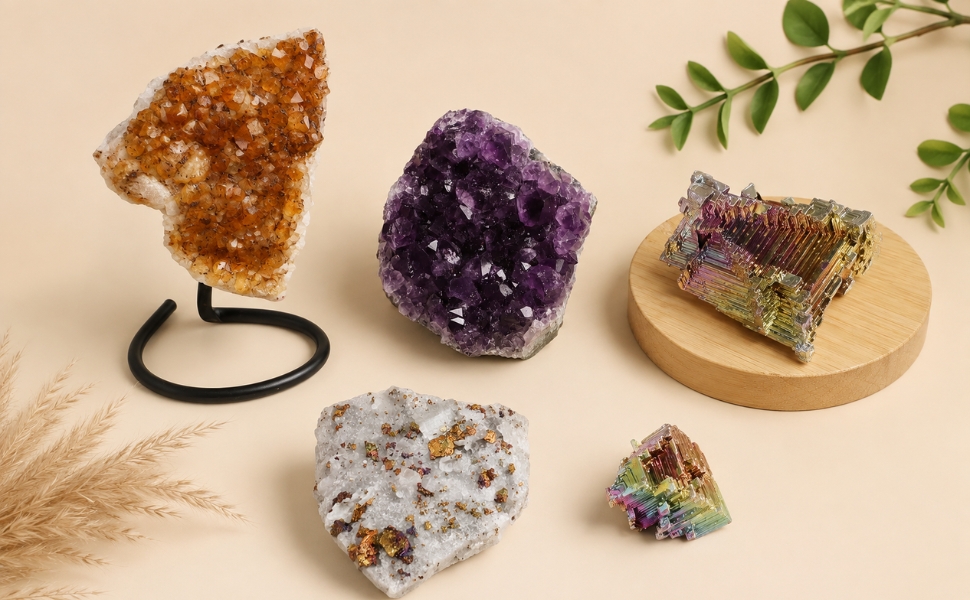
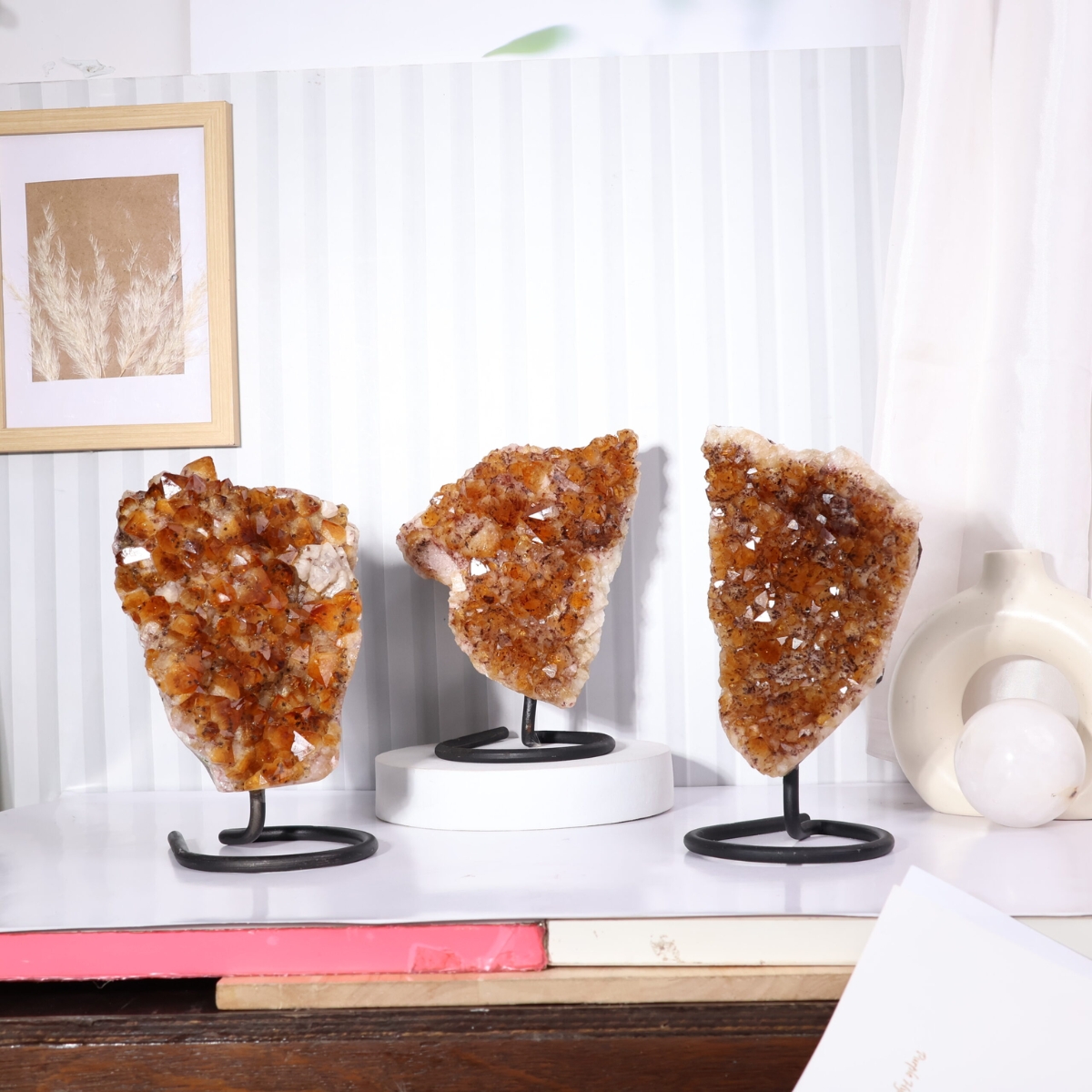
Crystal clusters are among the most distinctive forms of natural crystals. With multiple crystal points growing together from a shared base, each cluster has its own shape, texture, colour and natural character. They are popular not only with crystal enthusiasts and collectors, but also with people looking for meaningful décor, meditation companions and thoughtful crystal gifts.
But what exactly is a crystal cluster, what does it mean, and how can you use one in your home?
In this guide, we explore crystal clusters, their traditional meanings and perceived benefits, how to choose one, where to place it, and how to care for it. We will also look at how clusters compare with other popular crystal forms, including pyramids, raw crystals, spheres, towers and crystal trees.
A crystal cluster is a natural crystal formation where several crystal points or formations grow together. Instead of being shaped into a polished sphere, tower or other finished form, a cluster generally retains much of its original geological appearance.
This makes every cluster different.
You may notice:
Multiple crystal points growing from one base
Natural variations in colour and clarity
Uneven or textured surfaces
Different point sizes and formations
Natural inclusions, fractures or mineral patterns
A unique shape that cannot be exactly replicated
From a geological perspective, crystals develop under specific conditions involving minerals, temperature, pressure and time. The result can be highly intricate formations that make natural clusters particularly appealing to collectors.
The meaning associated with a crystal cluster depends largely on the specific crystal and the spiritual or metaphysical tradition being followed.
Generally, crystal clusters are often symbolically connected with growth, connection, harmony, abundance and amplified energy because many individual points develop together from one formation.
In crystal practices, clusters are commonly viewed as suitable for:
Creating an uplifting atmosphere
Supporting meditation and mindfulness
Representing growth and connection
Decorating a spiritual or personal space
Bringing natural beauty into the home
Creating a meaningful gift for someone interested in crystals
It is important to distinguish traditional crystal beliefs from scientific evidence. Claims that crystals can heal illnesses, treat medical conditions or produce measurable energy effects are not established by scientific evidence. Crystals can nevertheless have personal, symbolic and decorative value, and many people enjoy incorporating them into mindfulness or spiritual routines.
What Are Crystal Clusters Used For?
One of the biggest advantages of crystal clusters is their versatility. You do not need a complicated ritual or specialised knowledge to enjoy one.
1. Home Decor
A crystal cluster can become a natural focal point on a shelf, coffee table, bedside table or display cabinet.
Its irregular shape adds visual interest that a manufactured decorative object may not provide. Larger clusters can work particularly well as statement pieces, while smaller specimens are easy to incorporate into existing decor.
For a UK home, consider displaying a cluster alongside:
Books
Candles
Houseplants
Wooden decor
Other mineral specimens
Crystal spheres or towers
2. Meditation and Mindfulness
Some people keep crystals nearby while meditating as a visual reminder to slow down and focus.
You might place a cluster beside your meditation cushion or on a nearby table. Rather than relying on claims about supernatural effects, think of the crystal as an object that helps create a consistent mindfulness environment.
3. Personal Spaces
A crystal cluster can also be placed somewhere you spend time regularly, such as a home office, bedroom or reading corner.
Choosing a location that you naturally see throughout the day can make the crystal a simple reminder to pause, reflect or reconnect with your intentions.
4. Crystal Collections
For collectors, clusters offer something particularly interesting: natural variation.
Even two clusters made from the same mineral can have completely different formations. This makes them attractive to people who appreciate geology, mineral specimens and natural decor.
How to Use Crystal Clusters in Everyday Life
You can use a crystal cluster in a way that fits naturally into your routine.
Place It in Your Living Room
A living room is one of the easiest places to display a cluster.
Choose a stable surface where the crystal can be appreciated without being knocked over. A shelf, console table or display cabinet can work well.
Keep It on Your Desk
A smaller cluster can make an attractive addition to a home-office desk.
You can use it as a visual pause point during a busy working day. Simply looking away from your screen for a moment and focusing on an interesting natural object can complement a short mindfulness break.
Add It to a Meditation Space
If you already have a meditation area, place the cluster somewhere visible.
You could combine it with a Crystal Sphere/Ball or Crystal Tower to create a varied display of natural and polished crystal forms.
Use It as Meaningful Decor
Not every crystal needs to have a specific practical purpose. Sometimes the best way to use a crystal is simply to appreciate its natural beauty.
This is particularly relevant when buying crystals as gifts. A distinctive cluster can feel personal because no two natural formations are exactly alike.
Where Should You Place a Crystal Cluster?
There is no scientifically established “correct” location for a crystal cluster. The best position depends on how you want to use and enjoy it.
Popular choices include:
Living room: Ideal for decorative displays and conversation pieces.
Bedroom: Suitable if you enjoy having natural objects around your personal space.
Home office: Useful as an attractive desk or shelf accessory.
Meditation area: Works well as part of a mindfulness environment.
Display cabinet: Particularly suitable for valuable, delicate or collectible specimens.
When choosing a location, prioritise stability, visibility and protection from accidental knocks.
Crystal Clusters vs Other Crystal Shapes
Crystal clusters are only one of the many forms available to crystal lovers. Each has a different appearance and can suit a different purpose.
Pyramids have a geometric appearance and are popular as decorative and spiritual objects. Their symmetrical shape makes them especially suitable for desks, shelves and display arrangements.
Explore Shubhanjali’s Crystal Pyramids when you want a more structured alternative to a natural cluster.
Salt lamps are primarily decorative lighting products made from salt crystals. Their warm glow makes them particularly popular for creating a cosy atmosphere in bedrooms, living spaces and relaxation areas.
They provide a different experience from mineral clusters because their main appeal is ambient lighting and décor.
Crystal towers are tall, polished or shaped crystal formations. Their vertical profile makes them useful for creating height and structure within a crystal display.
Crystal trees combine natural crystal chips or stones with an artistic tree-like structure. They are particularly popular as decorative pieces and meaningful gifts.
How to Choose a Crystal Cluster
Buying a natural crystal cluster is largely about finding a specimen that appeals to you.
Each has its own colour, structure and traditional symbolism.
Look at the Natural Formation
Pay attention to the arrangement of points and the overall shape.
A cluster with a dramatic formation can work beautifully as a statement piece, while a smaller specimen may be more practical for a desk or bedside table.
Think About Size
Before purchasing, consider where you intend to display it.
For example:
Small clusters: desks, bedside tables and small shelves
Medium clusters: bookcases and display units
Large clusters: statement décor and dedicated displays
Expect Natural Variation
Natural crystals can contain inclusions, minor chips, colour variations and internal fractures.
These characteristics do not necessarily mean the crystal is defective. They are often part of its natural formation.
Build Your Crystal Collection With Shubhanjali
Whether you are buying your first natural crystal or expanding an existing collection, choosing the right form can make your purchase more meaningful.
A crystal cluster is ideal when you want a distinctive natural formation with plenty of character. If you prefer geometric shapes, consider a crystal pyramid or crystal tower. For smooth, polished decor, a crystal sphere may be the better choice. Raw crystals offer a more natural specimen aesthetic, while crystal trees and salt lamps bring different decorative elements to your space.
At Shubhanjali, you can explore a variety of natural crystals, crystal decor and meaningful spiritual gifts designed for UK customers.
From natural clusters to pyramids, raw crystals, salt lamps, spheres, towers and crystal trees, choosing a piece ultimately comes down to what you connect with, what suits your space and what you genuinely enjoy having around you.
A beautiful crystal does not need to promise extraordinary powers to have a place in your home. Sometimes, its natural formation, symbolism and the simple experience of appreciating something created by nature are more than enough.